





















































































































































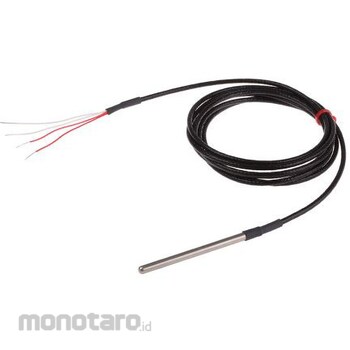
RS PRO RS + PRO + Pt100 + sensor 123-5595 1pc

Rp1.999.900
Persediaan
Spesifikasi Produk
| Model Number | 123-5595 |
|---|---|
| Unit | 1pc |
| ROHS Directive (Corresponding to 10 Substances) | Correspondence |
| M Code | 48508959 |
| Berat (Kg) | 0.1 |
| Tanggal Produk Terdaftar | 21 February 2026 |
| Terakhir Diperbaharui | 22 February 2026 |

Informasi Produk
Feature
SpecificationSensor type: PT100, probe length: 75 mm, probe diameter: 4.5 mm, minimum detection temperature: -50 ° C, maximum detection temperature: + 250 ° C, terminal type: bare wire tail, cable length: 2 m, probe material: stainless steel Steel, Number of wires: 4, Accuracy: Class B, RS Pro General purpose 4-wire Pt100 PRT probe, with shielding Teflon lead. RS Pro high quality, high reliability Pt100 PRT (Platinum resistance thermometer) or RTD (Resistance temperature detection) Instrument) Detection probe. This RTD probe features a detection element housed in a rigid 316 stainless steel sheath for a robust construction. The leads are made of durable and flexible Teflon insulation, which protects them from electromagnetic interference. This platinum resistance thermometer provides accurate and reliable temperature measurement in a variety of applications. What is RTD? RTD is a type of temperature sensor based on the correlation between metal and temperature. The higher the temperature of a metal, the greater its resistance to electric current. This resistance can be measured and converted into a temperature reading. The "Pt" in the "Pt 100 RTD" stands for platinum (platinum wire or film), and "100" means that the temperature sensor has a resistance of 100 Ω at 0 ° C. Shirokane is the most reliable metal because its resistance changes linearly over a wide range of temperatures. What is a .Pt100 probe? A .Pt100 probe is the most robust form of RTD. The Pt100 temperature sensor element is mounted inside a metal sheath or probe. This protects the sensor element from being damaged by the surrounding environment when it is inserted into the process under measurement. The other end of the probe is terminated with an insulated lead consisting of a 4-wire tail connected to the temperature measuring instrument. Features and advantages. High stability detector, high precision output IEC60751 Class B precision / tolerance Temperature measurement range -50 -> + 250 °C Achieves accurate readings with 4 leads 2, 3, or 4 wires Lead connection to Pt100 equipment High-rigidity 316 corrosion-resistant stainless steel sheath protects detector elements Flexible Teflon insulation provides insulation, electrical insulation and impact strength, moisture, corrosion and abrasive chemistry even at extreme temperatures Material Protection Shielding cables protect against electromagnetic interference. Applications. These ruggedly designed Pt100 PRT sensor probes are ideal for a variety of general purpose industrial applications, including: Air conditioning and refrigeration Chemical industry Plastic processing stoves and grills Air, gas and liquid temperature measurement Exhaust gas temperature measurement Food processing lab. Frequently asked questions. How does the PRT temperature sensor work? The PRT temperature sensor is a sensor element. It works by installing (or the process end) in the equipment or by incorporating it into a process that requires temperature measurement. The higher the platinum resistor thermometer, the greater the resistance to current. Every time the temperature rises by 1 degree, the electrical resistance also changes according to the set ratio. This ratio is called the temperature coefficient. For platinum, this ratio is 0.00385 Ω / Ω / ° C, and for a Pt100 with a resistance of 100 Ω, the resistance increase per 1 ° C temperature is 0.385 Ω. Therefore, the sum of the resistance measurements can be measured and converted to temperature. How to measure resistance. The resistance value generated by a temperature sensor is measured by the flow of current through one of the wires to generate a voltage. This voltage is measured using a suitable bridge or voltmeter and the resistance is calculated according to Ohm's law (R = V / I). Once the resistance is known, it can be converted to temperature readings using a calibration formula or a Pt100 table. You can also connect a temperature measuring device or calibrator to the lead wire of the probe to automatically convert the measured resistance value to a temperature measurement value.
Ketentuan dan Kondisi Barang
COD Tidak Berlaku
Pembayaran COD tidak tersedia untuk produk ini. Lihat selengkapnya
Pengembalian Barang 14 hari
Berubah pikiran tidak dapat diterima. Lihat selengkapnya
GRATIS ONGKIR* ke Jabodetabek, Banten,
Jabar & Jatim dengan minimum total pesanan Rp200.000 saat checkout. Lihat selengkapnya
Jabar & Jatim dengan minimum total pesanan Rp200.000 saat checkout. Lihat selengkapnya
Pilih jenis produk yang diinginkan
| Nomor SKU | Model Number | Masa Persiapan Barang | Harga | Jumlah |
|---|---|---|---|---|
| Loading... | ||||
Ulasan Produk

Tidak ada ulasan


 Buka WhatsApp